
The European prefab housing market was valued at USD 37 billion in 2026 and is expected to expand at a compound annual growth rate (CAGR) of 7% from 2025 to 2031, to reach a market size of USD 52 billion.. This market sector is growing fast due to several changes in our lifestyle and in our region’s economic conditions. Prefabricated homes are built-off site and either assembled or transported on-site: among these we mainly find modular homes, where complete sections of a house are produced in a factory and then assembled on-site on a concrete foundation. Today, it is not only family houses that are build modularly: it is often entire buildings, such as schools, hospitals and other public facilities. To the prefabricated market also belong the much smaller market of tiny homes, log home kits and mobile homes, that are partly or entirely built off-site (manufactured homes).
Industry Analysis
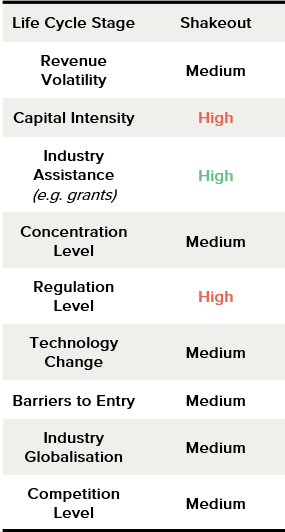 Since the type of prefabricated homes can vary very much in terms of size, the industry is still composed of very large players as well as small local businesses. However, as demand increases and price pressure increases, we will see increasing consolidation and also the development of a more sophisticated value chain. This industry is characterised by a high capital intensity, which constitutes a barrier to entry for small players, a high industry assistance to some respect, as the constant development of new environment-related housing laws favours the use of new modern buildings, as well as the the fact that many new public buildings are commissioned directly by government agencies. The regulation level is high and varies across countries, which on the other side makes international development and penetration into the private market slow in some instances.
So why is this sector booming?
- Severe housing shortages due to growing population (estimated at 10 million units of affordable housing shortages in the continent, particularly in Western European countries), coupled by skilled construction labour shortage, are leading many to cut corners and opt for quicker and simpler housing options
- Carbon neutrality targets favour prefabricated/modular homes as they already come with integrated innovative solutions and materials that fit today’s environmental standards, such as lower material waste and energy-efficient home systems
- Inflationary construction costs can result in pricey construction work for building new homes or for restructuring old ones. While prefabricated houses do not come cheap, the costs can be planned in advance
- Quick delivery and less waste is an advantage in an ever fast-paced world where delays end up costing money, whereas a controlled factory production allows for the ability to plan construction timing more precisely and reducing material waste, making the whole process more efficient. With components manufactured off-site in controlled factory environments, projects can be completed up to 50% faster than traditional methods, although there can be disruptions and delays with the production of prefabricated homes as well. Waste is reduced to 10 to 15 kilograms per square metre, compared to 25 to 30 kilograms for conventional builds. Embodied carbon can be reduced by up to 45 percent, aligning modular construction with the EU’s sustainability goals. The modular construction approach is inherently aligned with circular economy principles, as modules can be designed for disassembly, reuse, and recycling.
- Government Assistance can be high in some countries, for example in the Netherlands where the government enabled easier permits and shorter approval times, in the UK where the government is investing in public modular buildings such as student accommodation, or in Germany, where there are generous subsidies for climate-efficient-housing. In general, many government are increasing the support for affordable housing.
Additionally, with the advent of AI and Advanced Robotics in factories, as well as the use of intelligent design such as Building Information Modeling (BIM), in the future we will likely see a more efficient factory output that could represent a further advantage for prefabricated homes.
The popularity of modular buildings are not the same across Europe. Northern countries, for example, have a longer history of wooden structures thanks to the local high quality wood and climate, while in southern regions these buildings are less popular and could be more easily damaged by the features on the climate. Sweden, Germany, the Netherlands and the UK, for example, have a widespread usage of prefabricated homes or buildings are represent some of the most active markets in Europe currently. Poland and other eastern European countries are becoming popular manufacturers of prefabricated homes that are later exported abroad, thanks to lower production prices and proximity of raw materials. Spain and Portugal are emerging markets, where this type of buildings are becoming more common, but it may not become as widespread as in other areas due to different weather, geography and laws.
Industry data for Germany indicates that prefabricated construction accounts for roughly 24–26% of newly approved single- and two-family homes, and in some regions exceeds 30%. Given annual housing construction volumes, this translates into roughly 25,000–40,000 prefab-home buyers per year.
Source: Mordor Intelligence
What are the main challenges of this sector?
- Just like government assistance can aid the development of this sector, in some areas government regulation impairs the growth of this sector. The permits for placing a prefabricated building on a plot of land can be difficult to obtain in some areas: the application of these permits is not consistent internationally, but they can also be incontinent within a country due to zoning laws, other building-type restrictions and sometimes, uneven bureaucracy.
- Banks and other lender are less willing to finance off-site buildings, but this is slowly changing as new building types are becoming normalised.
- The steep increase in prices of materials, such as steel and timber, due to higher demand in the recent years, have made prefabricated homes less competitive.
- The perception from the public that prefabricated homes may be of lesser quality, shorter duration and not as good of a long-term investment as traditional on-site built homes. For example, in Northern countries such as Sweden, modular timber buildings have been widely used for longer and their use in more normalised compared to other countries.
Source: Mordor Intelligence
What are the specific regulations that affect the prefabricated market in Europe?
- The Construction Products Regulation (CPR) requires CE marking for building components. A major structural issue is that modules certified in one EU country cannot be used in another, however, the updated CPR (EU 2024/3110) introduces Digital Product Passports for construction components, machine-readable records covering materials, carbon footprint, CE markings, and energy performance. These are designed to cut approval times and enable automated regulatory checks across borders. Authorities can scan a QR code or NFC tag and verify compliance instantly automatically in another. Cross-border trade requires separate national certifications, creating obstacles for manufacturers seeking to expand within the EU.
- The nearly zero-energy building (nZEB) standards apply equally to modular and traditional construction. Modular homes typically meet nZEB requirements comfortably, thanks to the precision of factory-controlled insulation and airtight envelopes.
- The Energy Performance of Buildings Directive (EPBD) mandates that all new buildings must be zero-emissions by 2030 (by 2028 for public buildings) and requires deep energy renovations of the worst-performing existing buildings
- However, national building codes vary considerably. Germany applies strict DIN 1055 structural standards and has developed specific prefabrication guidelines. Sweden’s BBR rules include provisions for heavy snow loads. France’s RE 2020 regulation imposes detailed energy and carbon compliance checks, slowing the approval process compared to the Nordic model. Ireland requires full planning permission for permanent modular homes, though reforms in 2025 are moving to ease rules for smaller units.
Source: Euronews
In addition to size, which often determines the type of buildings the company is contracted for, there are three main categories of prefab companies depending on their main focus:
- The construction company, focused on the production and assembly of homes
- The manufacturer, focused on higher automation of factory systems and use of robotics
- The technology company, focused on the use and development of the most advanced technologies (such as the use of specialised or proprietary software)
As additional income streams, one can see large construction companies also taking on the role of the developer, while smaller producers of prefab homes may also have build-to-rent revenue streams.
Both the paper Financial Modeling for Modular and Offsite Construction and Financial Models for Prefabricated Housing advocate for collaboration between lenders, government, developer, manufacturers and other institutions to improve education around the subject and to unlock suitable financing products to enable the expansion of the industry.
Throughput time
Time from production start to factory completion.
Manufacturing defect rate
Measures quality performance and can be measured based on manufacturing defects, warranty claims and additional labour.
Order backlog
Future contracted revenue.
Backlog-to-revenue ratio
Backlog : Annual Revenue
M&A Activity
While the sector is still fragmented, consolidation is starting. The increasing automation in factories and use of robotics means that top companies will be able to achieve higher margins, while smaller companies may become less competitive and face the possibility of selling. Recently, the most relevant M&A trends, as highlighted by Mordor Intelligence have been:
- Private-equity Capmont’s acquisition of DFH secures five brands under one operational roof, positioning the investor to standardize design libraries and bulk-source materials
- BESIX’s stake in Bao Living scales digital materials passports
- Skanska divested its Gullringen factory yet retains the BoKlok brand under a licensing model, decoupling capital-heavy manufacturing from high-margin development
- Peikko’s alliance with CREE Buildings broadens hybrid timber-concrete offerings and accesses a licensed contractor network
- Automation deployments at Gropyus, KUKA-Kleusberg, and ABB-AUAR will likely create a two-tier market in which scale and robotics secure margin resilience, forcing smaller traditional assemblers either to consolidate or retreat.